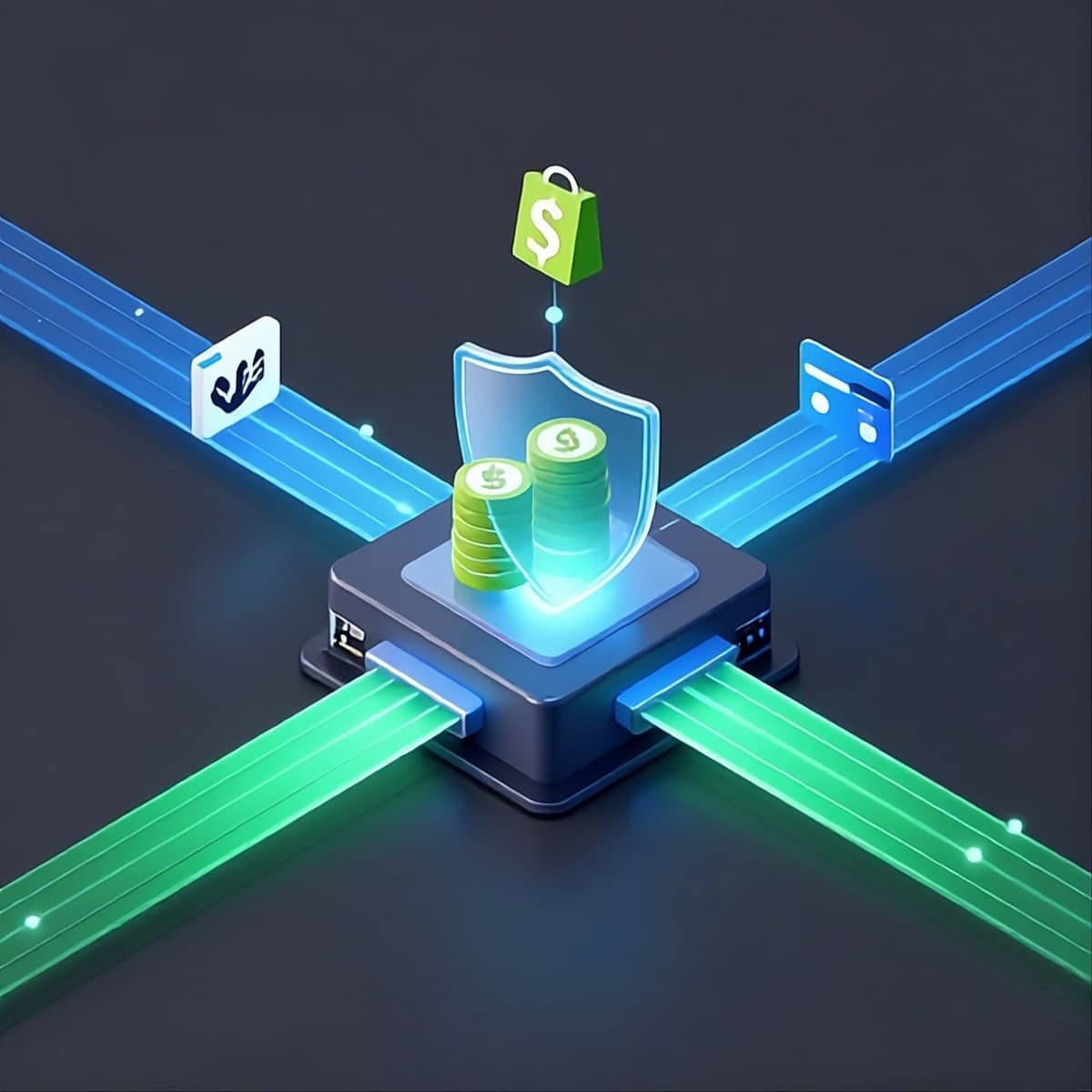
Every year, e-commerce merchants lose billions of dollars to chargeback fraud and “friendly fraud.” When a customer falsely claims an item was “not received,” credit card companies give store owners a punishingly short window to compile, format, and submit solid legal proof of delivery.
If you miss that deadline or submit incomplete files, your business loses the retail price of the product, the physical inventory, and an added $15 to $25 chargeback processing fee.
For high-volume merchants using platforms like Shopify, WooCommerce, BigCommerce, or Adobe Commerce, manual dispute management is an expensive operation. This is where an asynchronous, backend-heavy web service pipeline changes the game by saving time and recovering lost revenue automatically.
Why Automated Ingestion Matters for Revenue Recovery
Traditional approaches to dispute resolution rely heavily on human labor. An employee must manually log into a payment processor like Stripe, check the transaction history, track down the order data inside the storefront admin, grab the tracking code, verify delivery with FedEx or UPS, and assemble everything into a PDF file.
An automated API-first ingestion pipeline completely eliminates this operational bottleneck. The lifecycle runs entirely behind the scenes across multiple e-commerce frameworks:
- Immediate Ingestion: Your system listens to incoming payment gateway dispute webhooks.
- Platform Enrichment: Background workers securely fetch the matching customer purchase details and shipping footprints.
- Evidence Synthesis: The engine generates a clean document packet combining transaction logs with carrier signatures.
- Gateway Delivery: The completed package is pushed directly back to the banking provider before windows close.
Below is the conceptual architecture behind a resilient, platform-independent chargeback protection service built to process multi-carrier events:
Payment Gateway          Your Web Service          E-Commerce Platform
(Stripe / PayPal)      (Ingestion Pipeline)       (Shopify/Woo/Custom)
       │                         │                         │
       │  1. Dispute Webhook     │                         │
       ├────────────────────────►│                         │
       │                         │                         │
       │                         │  2. Fetch Order Data    │
       │                         ├────────────────────────►│
       │                         │  & Activity Logs        │
       │                         │                         │
       │                         │◄────────────────────────┤
       │                         │                         │
       │                         │                         │
       │                         │──┐ 3. Fetch Delivery    │
       │                         │  │    Proof via API     │
       │                         │◄─┘    (FedEx/UPS/etc.)  │
       │                         │                         │
       │  4. Submit Evidence     │                         │
       │     (Generated PDF)     │                         │
       │◄────────────────────────┤                         │
       │                         │                         │
Engineering a Multi-Tenant, Zero-Leakage Pipeline
When handling customer orders, business transactions, and API keys for multiple merchants, security and isolation are critical.
To protect sensitive data completely, architectural patterns have shifted toward a one-database-per-merchant architecture. Instead of consolidating all client data into one massive, central database table, each merchant’s data is housed in an completely isolated, encrypted SQLite database file (e.g., data/tenants/merchant_abc.db).
Using an isolated data pattern built with high-performance, compiled languages like Go, this layout guarantees distinct system advantages:
- Zero Cross-Tenant Leaks: It is physically impossible for an accidental database query to spill data from one store owner into another because workers only open one database connection path at a time.
- Write Stability under Load: Utilizing SQLite’s Write-Ahead Logging (WAL) mode allows endless concurrent reads alongside stable, zero-collision database writes.
- Lightweight Deployments: Because the database runs directly in-process, the entire web service can deploy onto servers as a highly optimized single binary, keeping server costs minimal.
Securing Platform API Keys
To integrate with a storefront, store owners must trust your service with their private platform access keys (such as a Shopify Admin token or WooCommerce REST API keys). To secure these keys at rest, the ingestion pipeline should use AES-256-GCM authenticated encryption.
Every time a merchant adds a token, your application derives a distinct, cryptographically random Nonce (a number used once) to wrap the key. Even if two merchants use the exact same access token, their encrypted fields in your databases look entirely unique, preventing decryption tampering.
Cross-Platform Performance Breakdown
| Pipeline Stage | Processing Core | E-Commerce Business Value |
|---|---|---|
| 📥 1. Ingestion Handler | • Asynchronous Webhook Workers • Normalized payload ingestion |
• Instant gateway handshake • Unblocks thread traffic under 100ms |
| 🔍 2. Data Recovery | • Headless REST/GraphQL lookups • Multi-platform connection mapping |
• Eliminates manual order tracking • Maps Shopify & WooCommerce instantly |
| 📦 3. Fulfillment Scraping | • Multi-carrier tracking API loops • Automated milestone extraction |
• Verifies official carrier signatures • Confirms real-time delivery timestamps |
| 📤 4. Dossier Upload | • Multipart form data generation • Direct banking gateway delivery |
• Submits complete legal evidence packages • Closes disputes before deadlines expire |
| 💰 5. Revenue Settlement | • Automated loop validation checks • Real-time financial audit logging |
• Recovers lost transactional capital • Instantly lifts merchant profit margins |
Calculate Your Recoverable Revenue Losses
How much capital is leaking out of your storefront every single month due to manual tracking limitations? Use our interactive calculator below to measure the baseline savings an automated pipeline delivers back to your monthly profit margin.
Chargeback Leakage & ROI Estimator
Estimated Impact Analysis:
Maximizing Profitability Through Automation
Implementing an automated chargeback web service transforms a costly operational mess into a hands-off revenue saver. Instead of spending hours gathering paperwork, store owners can activate an automated pipeline once and watch their capital return directly to their balances.
Because it operates on clear data lookups and automated submissions, merchants experience lower dispute processing costs, drastically reduced overhead, and an immediate lift in retained margins across all major storefront channels.
Ready to Secure Your Store’s Bottom Line?
If you are an e-commerce store owner losing revenue to chargebacks, manually fighting disputes is costing you time and money. Our specialized automated pipeline platform integrates with your storefront in minutes, securing your credentials with bank-level encryption and recovering your revenue on autopilot. Contact us today to stop losing revenue.