Building High-Performance Web Services: Why We Built an E-Commerce Backend in Modern C++
In modern enterprise applications, microservice latency directly impacts business revenue. While interpreted scripting languages provide fast initial scaffolding, they often struggle under heavy concurrent transaction volumes, inside resource-constrained environments, or when bridging gaps during complex legacy system integration projects.
This case study breaks down how our custom software development group engineered a high-throughput, memory-safe, stateful web platform using Modern C++. By pairing native compilation with targeted, minimalist framework architectures, we proved that compiled languages offer massive competitive advantages for specialized enterprise architectures.
Engineering high-performance microservices for enterprise scalability
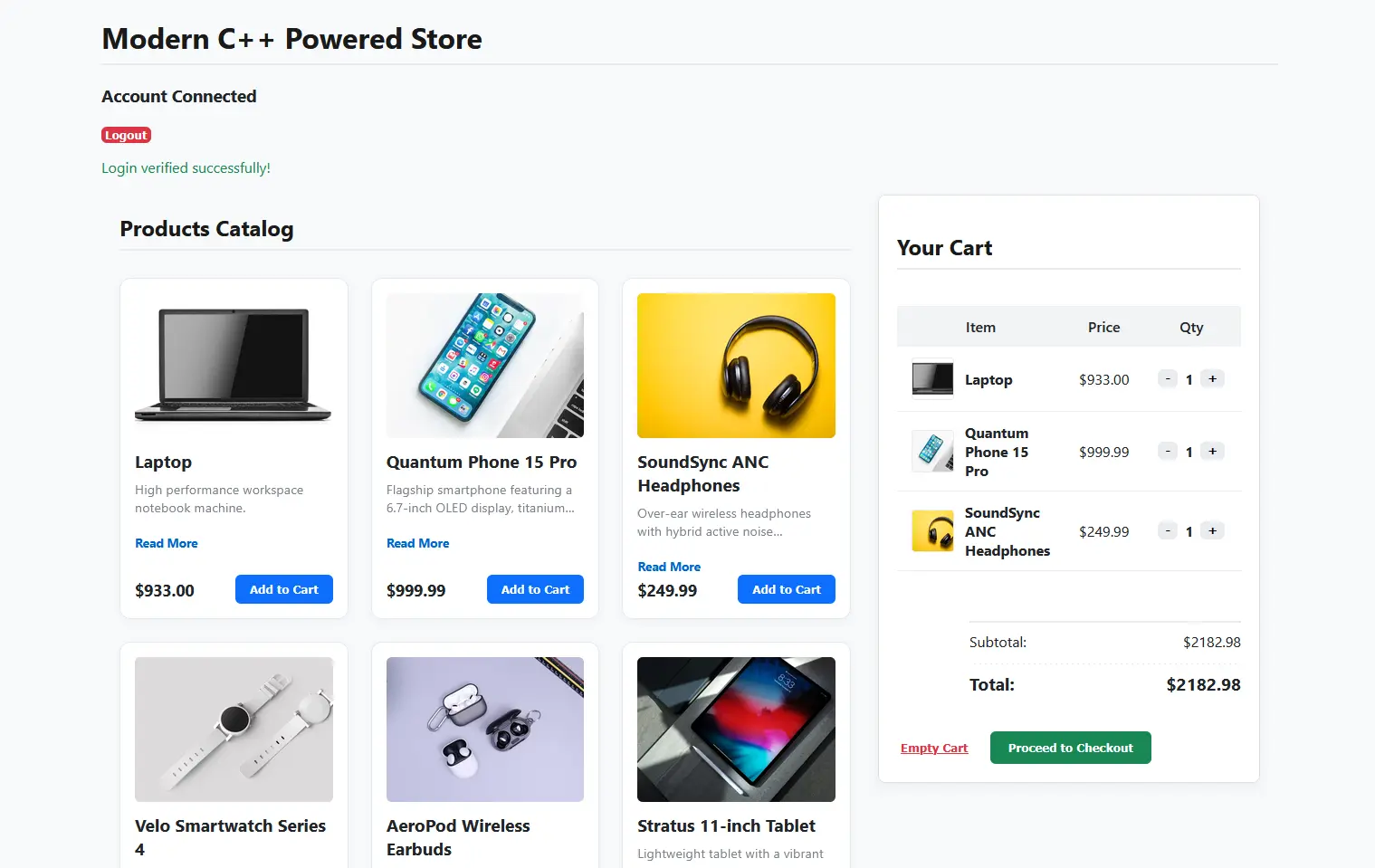
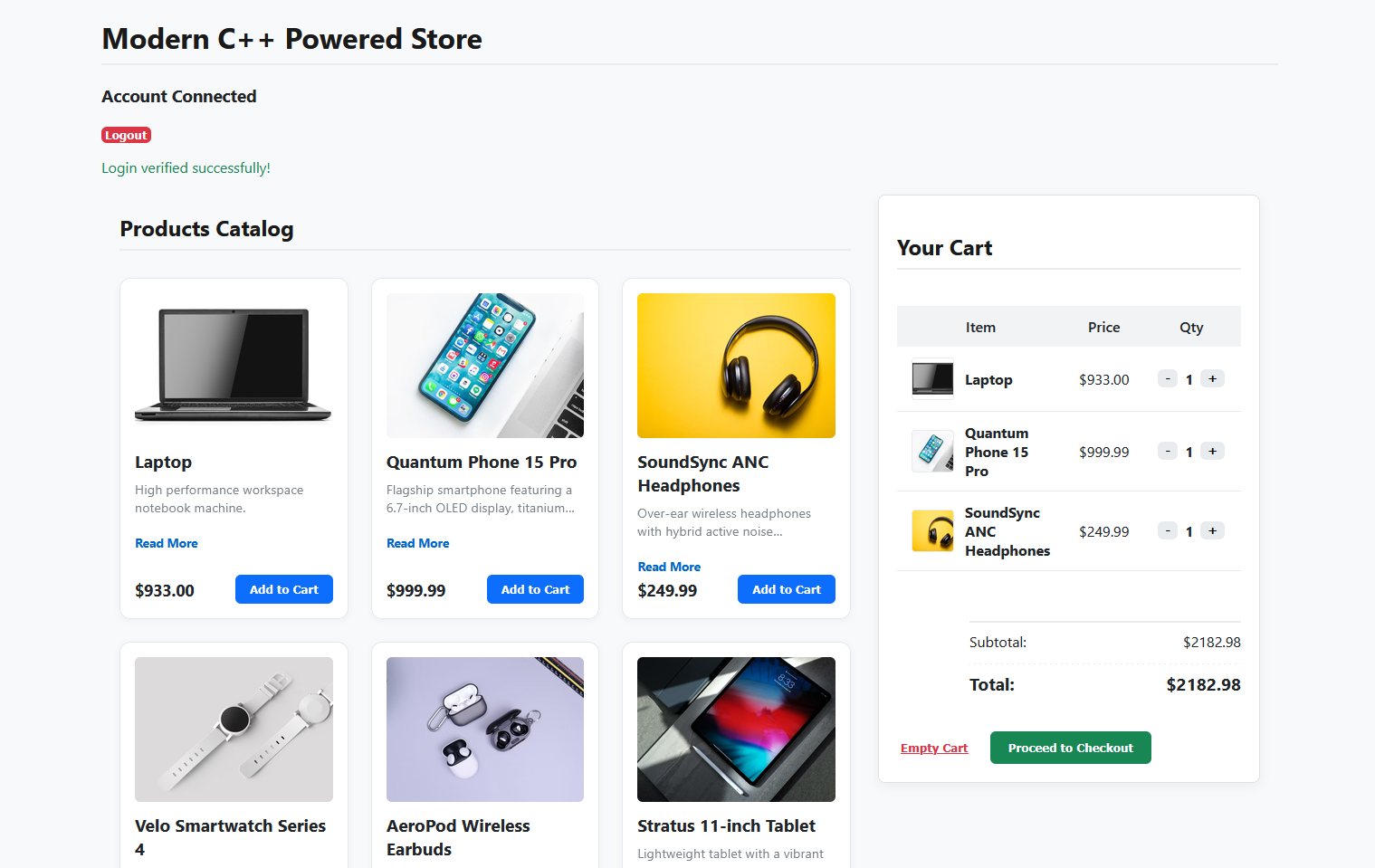
Figure 1: Our production-ready responsive storefront UI making low-latency REST calls to a compiled native application layer.
Our custom software development team designs specialized backend microservices using native C++ compilation to bypass complex external dependencies and heavy runtimes. By embedding lightweight, multi-threaded HTTP layers directly into native applications, we enable businesses to deploy sub-millisecond web environments across standalone desktop systems, secure cloud clusters, and resource-constrained infrastructure.
The Architectural Advantage of Lean Engineering
Traditional corporate software suites often introduce sprawling dependency trees that complicate deployment pipelines and widen the security attack surface. Our consulting group eliminates this bloat. By architecting self-contained, compiled services that leverage predictable thread execution models, we deliver applications with a negligible memory footprint. This makes our software engineering services a premier choice for businesses seeking to minimize cloud hosting overhead while maximizing transactional velocity.
Accelerating Enterprise Systems with Legacy System Integration
Many enterprise businesses run core operations on reliable, deep-seated back-office systems. However, extracting high-speed real-time metrics out of older core architectures to power modern client-facing applications poses a severe infrastructure challenge.
Seamlessly Bridging Old and New Platforms
Our development team constructs lightweight interoperability wrappers directly adjacent to baseline corporate infrastructure. By writing tailored C++ microservices that act as ultra-fast communication layers, we translate incoming Webhook JSON payloads directly into legacy hardware transactions. This approach eliminates the performance bottlenecks introduced by bulkier middleware platforms, giving your organization a path to:
- Extend Hardware Lifespans: Expose legacy assets to modern cloud environments securely without rewriting core infrastructure.
- Optimize Resource Distribution: Free up valuable database cycles by computing session states natively inside the C++ runtime memory frame.
- Achieve Thread Isolation: Keep high-frequency web traffic completely sandboxed away from your primary enterprise registers.
Engineering thread-safe state in an HTTP microservice
Managing persistent data—such as a user’s active shopping cart—across stateless HTTP requests requires meticulous memory architecture. Unlike languages that rely on stop-the-world garbage collectors, C++ offers precise deterministic object lifecycles.
Concurrency and Thread Safety
Because modern web gateways route incoming API traffic across multiple threads concurrently, protecting core business logic from data races is critical. Below is the production-ready structural pattern our custom software development group implements to guarantee thread isolation and safe mutations:
#include <httplib.h> // A lightweight header-only wrapper chosen for minimal overhead
#include <nlohmann/json.hpp>
#include <mutex>
#include <unordered_map>
#include <string>

// Struct tracking exact product variables
struct CartItem {
    std::string item_name;
    double price;
    int quantity;
};

class ShoppingCartManager {
private:
    std::unordered_map<std::string, CartItem> active_cart;
    std::mutex cart_mutex;

public:
    nlohmann::json calculate_totals() {
        std::lock_guard<std::mutex> lock(cart_mutex);
        double subtotal = 0.0;

        for (const auto& [id, item] : active_cart) {
            subtotal += (item.price * item.quantity);
        }

        return {
            {"subtotal", subtotal},
            {"total", subtotal},
            {"status", "success"}
        };
    }
};
By utilizing RAII (Resource Acquisition Is Initialization) via std::lock_guard, our architecture guarantees that session data remains consistent even during heavy checkout bursts, entirely eliminating race conditions before they can corrupt transaction registers.
Scaling REST API endpoints for sub-millisecond execution
To achieve maximum conversion, frontend applications must communicate with backends instantly. Our systems configure explicit endpoints to parse payloads, update application states, and serve structural variables with minimal routing overhead.
int main() {
    httplib::Server server; // Wrapped inside our custom application loop
    ShoppingCartManager cart_manager;

    // Direct route serving real-time system metrics
    server.Get("/api/cart/summary", [&](const httplib::Request& req, httplib::Response& res) {
        auto json_payload = cart_manager.calculate_totals();

        res.set_header("Access-Control-Allow-Origin", "*");
        res.set_content(json_payload.dump(), "application/json");
    });

    server.listen("0.0.0.0", 8080);
    return 0;
}
Conversion Impact of Low-Latency API Design
In digital commerce, every 100 milliseconds of latency reduces conversion rates by up to 7%. By processing calculations natively on the server side without layer abstraction overhead, frontend UI components update instantly when elements change.
Whether a user updates an item quantity or clicks an absolute action item like a checkout pipeline button, our custom software implementations respond smoothly, lowering cart abandonment metrics and driving business revenue.
Accelerate your infrastructure with custom C++ software development
Building highly performant, thread-safe, and low-latency digital assets requires deeply specialized engineering knowledge. Standard web templates often fall short when your business demands extreme scalability, custom hardware integrations, or rock-solid stability under load.
Our technical consulting group specializes in designing bespoke software solutions tailored to complex operational demands:
- High-Throughput Microservices: Replacing legacy bottlenecks with ultra-fast native runtime compiled applications.
- Embedded Web Dashboards: Integrating clean web control panels into local server environments using minimal memory footprints.
- Performance Audits: Identifying thread lock bottlenecks, optimizing system runtimes, and dramatically reducing infrastructure costs.
Contact Our Custom Software Development Team Today to schedule an architectural review and discover how we can transform your legacy system performance.