Why We Build Our Own Business Software Instead of Renting SaaS
When a growing business hits an operational bottleneck, the default playbook is usually the same: buy another SaaS subscription, glue a few spreadsheets together, and accept the monthly fees and rigid workflows as the cost of doing business.
We have never operated that way. From day one, our rule has been simple: when we need software to run our business or deliver better work for clients, we build it ourselves.
Rather than forcing our team into off-the-shelf templates or paying recurring fees for bloated platforms we only use 10% of, we built a lightweight suite of 14 custom internal applications tailored to how we actually work—all powered by Go (Golang) under the hood for speed and reliability. Today, those tools handle everything from vendor catalog onboarding and security audits to scheduling, CRM, and e-commerce.
Here is why owning our core tools beats renting software, what those 14 applications actually do, and how that proprietary infrastructure translates into faster, cleaner delivery for our clients.
Why Custom Software Beats Off-the-Shelf SaaS (And Why We Build It in Go)
Renting third-party software comes with hidden costs that compound as you grow: recurring per-seat fees, rigid data models, security risks from bloated plugin ecosystems, and hours wasted manually moving data between disconnected platforms.
By building our own internal applications on a standardized Go backend paired with clean, dependency-free browser interfaces, we keep complete control over our operations while gaining four clear advantages:
- Zero Recurring Seat Fees or Lock-In: We never get hit with surprise pricing tiers when we add team members, increase order volume, or scale up usage.
- Built for Our Exact Workflow: Instead of changing how our team works to fit a generic template, every screen, validation rule, and button matches our exact process.
- Fast, Lightweight & Low Maintenance: Because we build in Go, every application compiles into a single, self-contained program with minimal server overhead—no fragile dependency trees or bloated runtimes.
- Built to Last: Go’s stability means internal tools we built years ago still run reliably today without constant framework churn or broken third-party updates.
Inside Our 14-App Ecosystem: Grouped by Business Function
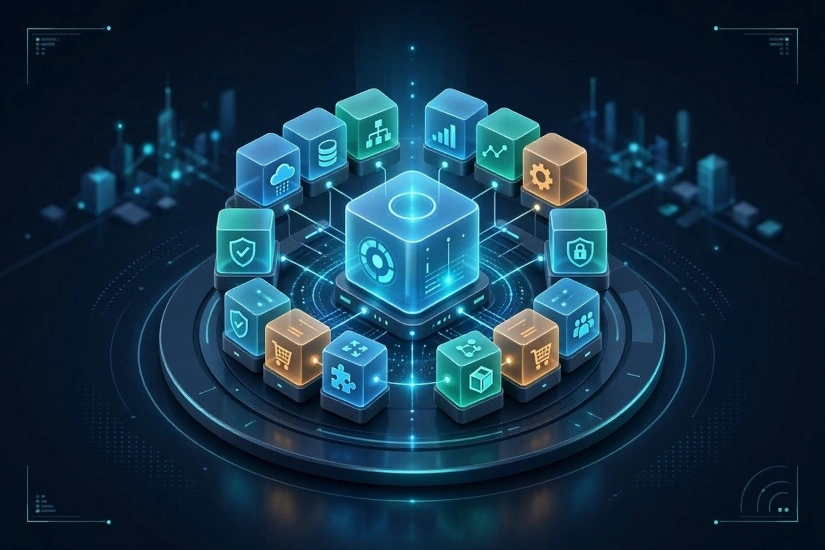
Rather than a collection of disconnected scripts, our internal software suite covers four core pillars of our agency and client operations:
1. Data Operations & E-Commerce
- CSV Mapper: Ingests supplier spreadsheets of any format, applies dynamic price markups and text rules with a real-time browser preview, and exports reusable mapping profiles.
- CSV Reconciliation: Cross-checks and reconciles high-volume tabular records automatically to catch discrepancies before data reaches production.
- Shopping Cart & Shopping Cart Admin: A lightweight, full-stack e-commerce engine and administrative backend built for speed, security, and complete checkout control.
2. Security Auditing & Quality Assurance
- Website Security Auditor: Automated scanning tool that inspects live websites for server misconfigurations, missing security headers, and exposure risks.
- PHP Vulnerability Scanner: Targeted code scanner designed to detect legacy vulnerabilities and unsafe patterns across PHP codebases before and after deployment.
3. Site Publishing, Scaffolding & SEO Automation
- Project Builder: Automates project setup and baseline architecture scaffolding so new builds start from a clean, standardized foundation.
- WYSIWYG Site Editor: Streamlined visual content editing environment built for fast, clean markup updates without CMS bloat.
- Internal Linking Tool: Analyzes site structure and content relationships to surface high-value internal linking opportunities automatically.
4. Client Operations, Scheduling & Lead Capture
- CRM System & Referral Portal: Custom relationship tracking and partner referral management tailored directly to our sales and onboarding pipeline.
- Booking Software: Streamlined appointment and resource scheduling without third-party widget bloat.
- Cloud Reminder & Scheduler: Reliable background job runner and notification engine for automated follow-ups and operational alerts.
- Configurable Webform Processor: Unified backend handler that validates, routes, and processes form submissions across multiple web properties.
Under the Hood: Three Tools in Action
1. CSV Mapper: Cutting Catalog Onboarding from 45 Minutes to 30 Seconds
- The Bottleneck: Onboarding supplier product catalogs meant manually renaming columns, calculating price markups, formatting titles, and appending descriptions across thousands of rows—a 45-minute task per file where one copy-paste mistake could corrupt live pricing.
- How We Solved It: We built a browser-based CSV transformation tool backed by a high-speed Go server. Team members upload a supplier CSV and a target template, map columns visually, preview calculated markups live in the browser, and save their column rules as portable configuration files for instant reuse the next time that supplier sends an update.
- The Payoff: Catalog onboarding dropped from 45 minutes to under 30 seconds, with zero manual formula errors.
2. Website Security Auditor & PHP Vulnerability Scanner: Automated Pre-Launch Protection
- The Bottleneck: Manual security reviews and code audits were time-consuming and risked overlooking subtle server misconfigurations, missing HTTP security headers, or legacy vulnerabilities buried inside inherited PHP codebases.
- How We Solved It: We built an automated auditing suite that runs parallel inspections across live endpoints and source files—checking TLS settings, security headers, outdated functions, and injection vectors—and generates clear, actionable reports in seconds.
- The Payoff: Comprehensive security and code health checks now run automatically before every launch and client onboarding, catching vulnerabilities early without slowing down schedules.
3. Shopping Cart & Admin: Full-Stack Commerce Without Platform Lock-In
- The Bottleneck: Off-the-shelf e-commerce platforms often introduce heavy frontend bloat, rigid checkout flows, plugin vulnerabilities, and escalating transaction fees that restrict customization.
- How We Solved It: We engineered a self-contained Shopping Cart and Administrative Portal powered by a compiled Go backend. It handles product catalogs, cart state, checkout processing, and order management through a fast, clean admin interface with zero third-party plugin dependencies.
- The Payoff: Sub-second page loads, hardened checkout security, and a flexible e-commerce foundation tailored to specialized B2B or B2C workflows.
The Elephant in the Room: Doesn’t Building 14 Apps Create Maintenance Debt?
It is a fair question. Anyone who has worked around software knows that custom tools can turn into a maintenance headache if they are over-engineered or stitched together with fragile dependencies.
We avoid that trap through three strict rules:
- One Tool, One Job: Instead of building one massive, complicated internal platform, each of our 14 apps is small, focused, and easy to reason about.
- One Standardized Stack: Every tool runs on Go with lightweight, standard browser interfaces—meaning any engineer on our team can jump into any tool and understand it in minutes.
- Zero Dependency Bloat: Because Go compiles down to a single self-contained program with no external runtime or plugin chains to break, tools we wrote three years ago run today with virtually zero upkeep.
Our rule of thumb for clients: If a commodity tool like email or accounting fits your workflow out of the box, rent it. But when a software tool touches your core operations, data accuracy, or competitive speed—owning it pays for itself quickly.
What This Means for Our Clients
We don’t build internal tools just for the sake of writing code—we build them so our clients get measurable results:
- Faster Turnarounds: When we migrate your catalog data, audit your security, or scaffold a new project, our proprietary tools handle the heavy lifting in seconds instead of days.
- Higher Accuracy & Security: Automated data reconciliation and vulnerability scanning catch edge cases that manual reviews miss.
- Battle-Tested Custom Software Expertise: We rely on our own custom-built applications every single day to run our business. When you hire us to build a custom web application, API, or internal tool for your company, you get practical, reliable architecture we trust with our own operations.
Have a manual workflow or rigid SaaS tool slowing your team down?
Whether you need a custom internal application, a high-speed data pipeline, or a legacy system modernized, let’s talk about what we can build for your business.