Big-Brand Checkout Speed Without Big-Brand Overhead
How we engineer bespoke, high-speed shopping carts for growing businesses—delivering sub-second product search, frictionless mobile checkout, and 100% code ownership with zero recurring SaaS fees.
Instant Search & Discovery
Shoppers find products in milliseconds—whether browsing by category or typing into the live search bar—cutting bounce rates on desktop and mobile.
Distraction-Free Cart Flow
A clean, intuitive cart with instant quantity controls and transparent pricing keeps
customers focused on completing their purchase.
Zero Monthly Platform Taxes
Powered by a single-binary Go backend and embedded SQLite database, the store runs
reliably on minimal infrastructure with full data ownership.
Independent retailers and growing online stores frequently hit an expensive fork in the road: hosted platforms charge escalating monthly fees and take an extra percentage cut of every sale, while heavy custom storefronts require maintaining two separate systems and slow down mobile shoppers.
At a Glance: Key Results for Store Owners
0% Platform Transaction Fees: Own your storefront outright with no monthly SaaS lock-in or extra cuts on top of standard Stripe processing.
Instant Cart Updates (< 50ms): Shoppers add items, adjust quantities, and see updated totals immediately—with zero page reloads.
Low Running Costs (~$5–$10/mo Hosting): A lean, single-server application handles traffic spikes effortlessly without bloated cloud bills or a full-time dev team.
1. The Challenge: Outgrowing Starter Platforms Without Over-Building
Growing online retailers typically run into two costly trade-offs:
Hosted e-commerce platforms charge escalating monthly subscriptions, restrict checkout customization, and take an extra percentage cut of every sale as revenue grows.
Heavy custom storefronts built with complex JavaScript frameworks require maintaining two separate systems (a storefront and a backend API), leading to higher agency retainers and slower load times on mobile connections.
The Goal: Build a custom online bookstore and shopping cart that delivers the instant, smooth buying experience shoppers expect from major retailers—while keeping the system simple, secure, and affordable for a small team to own.
2. The Shopping Experience: Built to Keep Buyers Moving
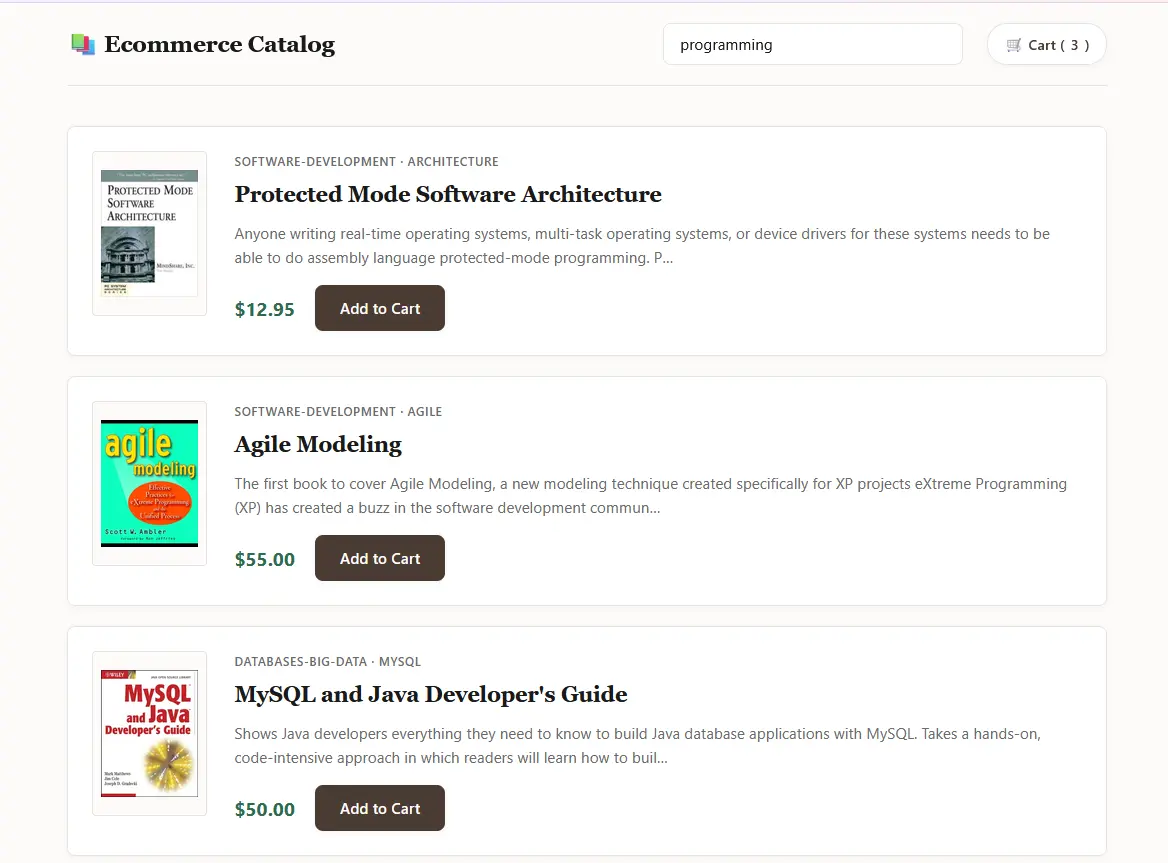
Instant “Add to Cart” Without Losing Your Place
When shoppers browse category shelves or search results, clicking Add to Cart updates their order in the background without reloading the page or resetting their scroll position:
The top-right cart pill badge (Cart (3)) pulses and updates live.
A clean confirmation toast slides in (Added “Agile Modeling” to your cart) and disappears automatically after 3 seconds.
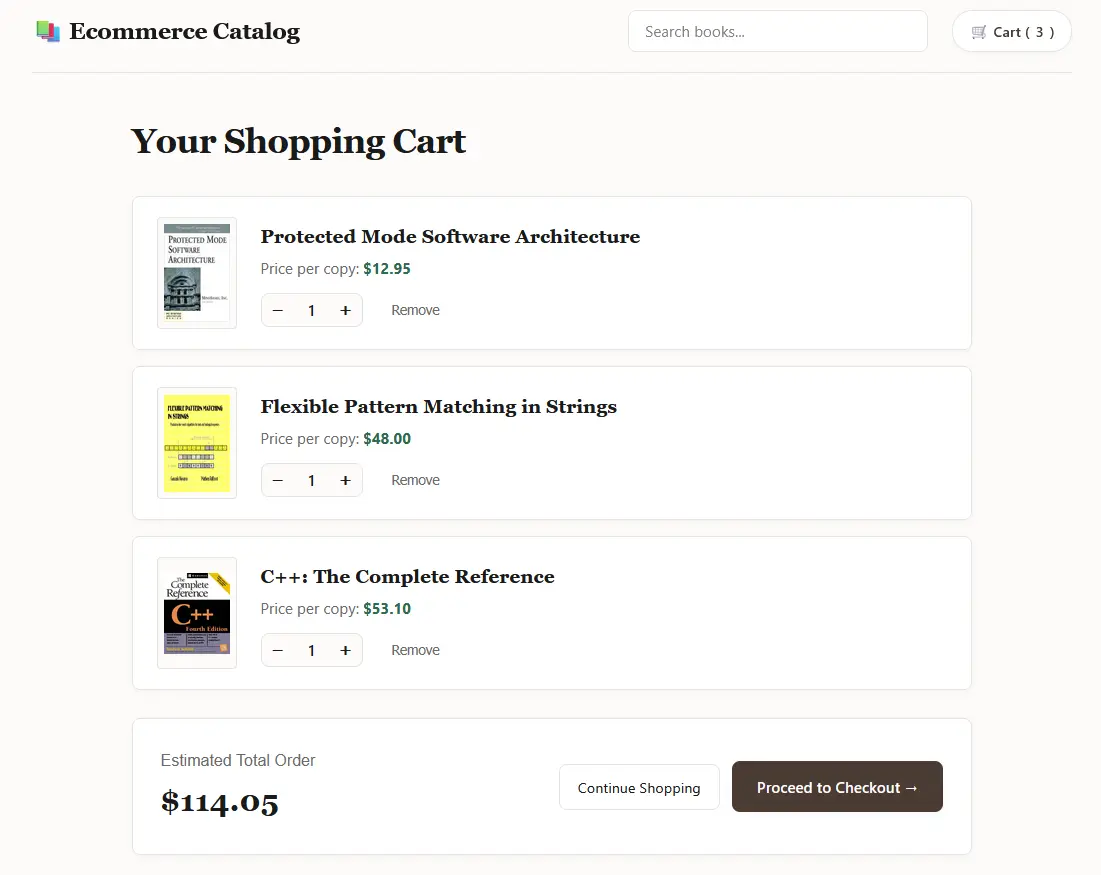
Effortless, Real-Time Cart Adjustments
On the /cart screen, customers can increase or decrease quantities (− / +) or remove items in a single click:
Line quantities, order subtotals, and the navigation badge update together in real time.
Dropping an item’s quantity to zero removes it smoothly and displays a clear prompt guiding shoppers back to the catalog.
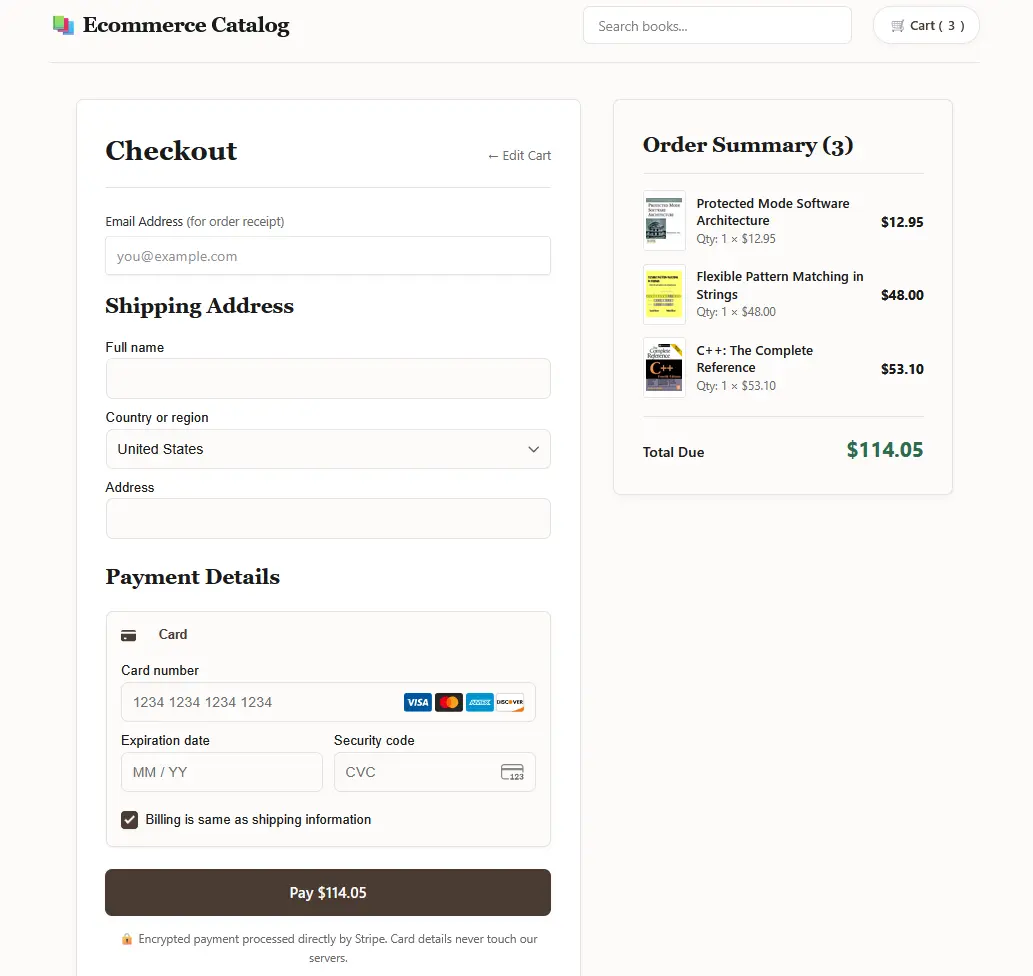
High-Trust, Single-Screen Checkout
To prevent last-second checkout abandonment, /checkout uses a proven two-column layout modeled after major retailers:
On-Brand Payment & Shipping Form (Left): Embedded Stripe Address and Payment fields—styled to match the store’s warm cream and bronze palette—let customers check out with credit cards, Apple Pay, Google Pay, or Link without leaving the site.
Sticky Itemized Order Summary (Right): Book thumbnails, quantities, and the verified total remain visible alongside the payment form so shoppers never have to guess what they are paying for.
3. Built-In Revenue & Security Protection
A fast storefront only helps a business if its numbers are accurate and protected from tampering:
Tamper-Proof Server Pricing: Even if someone alters webpage code in their browser, the storefront ignores client-submitted prices and verifies canonical product pricing directly against the store’s database before adding items or charging a card.
Zero Cart-Sync Errors: Because the server acts as the single source of truth for item counts and subtotals, shoppers never see mismatched cart badges or checkout surprises caused by stale browser caches.
Works Even on Restricted or Slow Connections: Every search bar and cart button is built on standard web forms with automatic server fallbacks—ensuring shoppers on spotty mobile networks or strict browser settings can still complete their purchase.
Bank-Grade Payment Security: Card details are encrypted and handled directly by Stripe in the browser, keeping sensitive payment data completely off the retailer’s server.
4. Why This Approach Saves Store Owners Money
Store Priority
Typical Heavy Storefront
This Lightweight Architecture
Business Benefit
Ongoing Maintenance
Two separate codebases (frontend app + JSON API)
Single unified server & HTML templates
Fewer moving parts and lower developer maintenance hours
Mobile Speed
Heavy JavaScript bundles that slow down phones
Instant server-rendered pages + lightweight HTML updates
Faster page loads and higher mobile checkout completion
Checkout Branding
Off-site redirects or rigid hosted templates
Custom two-column checkout with styled Stripe Elements
Keeps shoppers on your domain from first search to final receipt
Monthly Hosting
Multi-service cloud clusters
Lean single-binary server + embedded database
Predictable ~$5–$10/month hosting with effortless traffic handling
5. Ready to Scale: Next Steps for Growing Stores
This shopping cart foundation is built to expand cleanly as order volume grows:
Automated Webhook Fulfillment: Recording paid orders and decrementing inventory automatically via Stripe webhooks—even if a shopper closes their browser right after paying.
Real-Time Stock Protection: Checking live inventory counts at checkout to prevent overselling limited-run items.
Customer Accounts & Abandoned-Cart Recovery: Saving carts across devices for returning buyers and sending automated reminders for uncompleted checkouts.
Under the Hood (For Technical Reviewers)
Core Stack: Go (net/http, html/template), SQLite, encrypted session cookies (gorilla/sessions), and vanilla CSS.
Targeted Hypermedia (htmx): Used selectively for stateful cart mutations (/cart/add via HX-Trigger events and /cart/update via HTML fragment swaps), while keeping global navbar search as a standard HTML <form> GET request for rock-solid browser history.
Payments: Embedded Stripe Payment Element & Address Element with custom appearance theming and server-verified PaymentIntent totals.
Want Checkout Speed Like This for Your Store?
If you’re outgrowing a rigid starter platform—or tired of paying high monthly fees for a slow storefront—let’s build a fast, custom shopping experience your business owns outright.